If you are planning a flooring upgrade, you may wonder whether a wood floor installation service also includes removing the flooring already in your home. In many cases, professional installers can remove old flooring before installing new hardwood, but the exact service depends on the flooring type, its condition, and the contractor’s scope of work. Understanding what is included can help you prepare your home, avoid unexpected charges, and keep your project on schedule. Old carpet, vinyl, laminate, tile, and damaged wood flooring may require different removal methods. Some floors can be removed quickly, while others may require additional labor to scrape adhesives, remove staples, or prepare the subfloor. Knowing what to expect before installation makes it easier to budget for the entire project and choose the right professional for the job.
Do Wood Floor Installers Usually Remove Old Flooring?
Many professional flooring contractors offer old flooring removal as part of their installation services, but it should not be assumed that removal is automatically included. Some companies provide complete flooring preparation, while others focus strictly on installing the new material after the homeowner has cleared the existing floor.
When you request a hardwood floor installation, ask the contractor whether removal, disposal, and subfloor preparation are included in the estimate. These services can significantly affect the overall project cost. A written estimate should clearly explain what the installer will remove and whether hauling away the debris is part of the price.
The type of flooring being removed also matters. Carpet may be relatively straightforward to pull up, while glued-down vinyl, ceramic tile, or multiple layers of flooring can take considerably more time. Old hardwood can also require additional work if boards are nailed or firmly attached to the subfloor.
What Types of Flooring Can Installers Remove?
Flooring professionals can generally remove many common types of existing flooring before installing new wood. Carpet, laminate, vinyl, engineered wood, and older hardwood are among the materials that may be removed during a flooring project.
Carpet removal often involves cutting the carpet into manageable sections, pulling it away from tack strips, and removing the underlying padding. The tack strips and staples may also need to be removed so the subfloor is ready for the next stage.
Laminate and floating floors can often be taken apart relatively quickly because they are not permanently attached to the subfloor. However, glued-down flooring may require more labor and specialized tools.
Tile can be more challenging because it may be firmly bonded to the surface underneath. Removing tile can create dust and debris and may reveal areas of the subfloor that require repair.
Existing hardwood flooring presents another consideration. In some cases, the old floor can be removed and replaced. In other situations, it may be possible to refinish the existing wood instead of installing an entirely new floor.
Why Does Old Flooring Need to Be Removed?
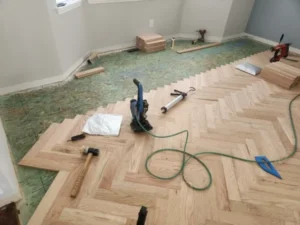
Old flooring is sometimes removed because the existing surface is damaged, uneven, unstable, or unsuitable for the new flooring material. Installing new wood over a poor foundation can create problems that become noticeable after the project is completed.
For example, moisture damage, rot, loose boards, significant unevenness, or deteriorated subflooring can affect the performance of a new floor. If these problems are hidden beneath the existing flooring, simply covering them may not solve the underlying issue.
Removing the old material also gives installers an opportunity to inspect the subfloor. This is important because the subfloor provides the foundation for the new flooring. Any damaged areas may need to be repaired or replaced before installation begins.
In some situations, however, removing the old flooring may not be necessary. Certain flooring materials can be installed over an existing surface if the substrate is stable, clean, level, and compatible with the installation method.
What Happens After the Old Flooring Is Removed?
Removing the old flooring is only the first stage of preparing the area for new wood. Once the existing material is gone, installers typically inspect the exposed surface to determine whether additional preparation is needed.
The subfloor may contain nails, staples, adhesive residue, dust, or damaged sections. These issues may need to be addressed before new flooring is installed. A clean and stable surface helps the new floor sit properly and reduces the possibility of movement or unwanted noise.
Installers may also check whether the floor is level. Minor variations can sometimes be corrected through appropriate preparation, while more significant problems may require additional work.
Moisture is another important consideration, especially when installing wood flooring. Excess moisture can affect wood and potentially cause expansion, contraction, cupping, or other problems. Depending on the project, contractors may perform moisture checks before proceeding.
Does Flooring Removal Increase Installation Costs?
Yes, removing old flooring can increase the total cost of a flooring project because it requires additional labor, tools, time, and disposal. However, the amount added to the project varies depending on the type and quantity of flooring being removed.
A simple carpet removal may require considerably less work than breaking up tile or removing glued-down flooring. Multiple flooring layers can also increase labor because each layer may need to be removed separately.
Disposal fees can be another cost. Old carpet, wood, tile, and other materials must be transported and disposed of appropriately. Some contractors include disposal in their overall estimate, while others charge it separately.
Homeowners should ask for an itemized estimate before work begins. This can make it easier to understand whether the price includes removal, subfloor preparation, debris hauling, and installation.
Can Homeowners Remove Old Flooring Themselves?
Homeowners can sometimes remove old flooring themselves, particularly when dealing with simple materials such as floating laminate or carpet. DIY removal can potentially reduce labor costs, but it also requires time, physical effort, and careful preparation.
One concern is accidentally damaging the subfloor while removing the existing material. Excessive scraping, prying, or hammering can create damage that must later be repaired before new flooring is installed.
There can also be safety considerations. Older flooring materials, adhesives, and construction products may require additional precautions. If you are uncertain about the material or its age, professional assessment is a safer approach.
Another issue is disposal. Flooring debris can be bulky and heavy, and local disposal requirements may apply. What seems like a simple removal project can become more time-consuming once transportation and cleanup are considered.
What Should You Ask a Wood Flooring Installer?
Before hiring an installer, ask exactly what the quoted price includes. This is especially important when the project involves removing existing flooring.
Ask whether the contractor will remove the old material, haul away the debris, remove adhesives or fasteners, and prepare the subfloor. You should also ask whether repairs to damaged subflooring are included or billed separately.
It is useful to ask how long removal and installation are expected to take. The timeline may vary based on the size of the area, type of existing flooring, condition of the subfloor, and installation method.
You should also discuss the type of wood flooring you plan to install. Solid hardwood and engineered wood can have different installation requirements, so the contractor should confirm that the existing structure is suitable.
Is Professional Flooring Removal Worth It?
Professional flooring removal can be worthwhile when the existing material is difficult to remove, the project involves several layers, or the homeowner wants to avoid the mess and physical work associated with demolition.
Experienced installers know how to remove flooring while minimizing unnecessary damage to the subfloor. They can also identify potential problems that may not be obvious to a homeowner, such as moisture damage, uneven areas, or deteriorated materials.
Professional removal can make the overall project more efficient because the same team can move from demolition to surface preparation and installation. This reduces the need to coordinate separate contractors for different stages of the project.
However, the value depends on the specific situation. If you have an easy-to-remove floating floor and are comfortable handling the work, DIY removal may be reasonable. For difficult materials or large areas, professional service may save significant time and effort.
Conclusion
Wood floor installers often can remove old flooring, but removal is not automatically included with every wood floor installation service. The cost and process depend on the existing flooring, its condition, disposal requirements, and the amount of subfloor preparation needed. Professional removal can make the project easier by allowing the same team to handle demolition, surface preparation, and new flooring installation. Homeowners should always ask whether removal and disposal are included in the estimate before work begins. A proper inspection also helps determine whether the old flooring must be removed or whether the new material can be installed over it. If you are planning a flooring upgrade in Firestone, Calabrese Hardwood Flooring can help you understand your options and prepare for your project. Call +1 720-384-8478 to discuss your hardwood flooring needs.
https://www.spreaker.com/episode/do-wood-floor-installers-remove-old-flooring–74207504
https://www.podomatic.com/podcasts/katherinelyo27podcast/episodes/2026-08-17T06_5
https://stream.redcircle.com/episodes/33b06948-dc1b-471b-9155-3ea12d57fe84/stream.mp3