Experience is one of the first things to consider when choosing a flooring contractor. Hardwood installation requires knowledge of wood movement, expansion gaps, subfloor conditions, room layouts, and different flooring materials.
Ask how long the company has been installing hardwood floors and whether it has completed projects similar to yours. A contractor who regularly works with hardwood is more likely to recognize potential problems before installation begins.
It is also helpful to ask about experience with the specific flooring you want. Solid hardwood, engineered hardwood, and specialty flooring can have different installation requirements.
A knowledgeable contractor should be comfortable explaining its installation process and answering your questions. If the company cannot clearly explain how it handles your project, consider comparing other contractors.
Customer reviews can give you valuable insight into a contractor’s reliability and workmanship. Read several reviews instead of focusing only on the overall rating.
Look for comments about installation quality, communication, punctuality, cleanliness, and whether the final cost matched the original estimate. Reviews from customers with similar hardwood projects can be particularly useful.
You can also ask the contractor for references from previous customers. Speaking with past clients may help you understand what it was like to work with the company.
Pay attention to how the business responds to negative reviews. A professional response that attempts to resolve concerns can demonstrate accountability.
A strong reputation does not guarantee perfection, but consistent positive feedback can give you greater confidence when making your decision.
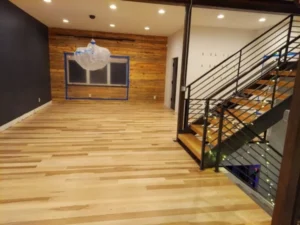
A contractor’s portfolio allows you to see examples of its actual workmanship. Ask for photographs of completed hardwood flooring projects that are similar to the work you want done.
Look closely at the details. Check whether boards appear properly aligned, transitions look clean, and the flooring meets walls, stairs, cabinets, and other surfaces neatly.
Also confirm that the photographs show the company’s own work rather than manufacturer images or stock photographs.
A quality portfolio should demonstrate attention to detail and experience with different room styles and flooring designs. If possible, ask whether the contractor can provide references for recently completed projects.
Seeing previous work can help you determine whether the company’s craftsmanship matches your expectations before you sign a contract.
Proper subfloor preparation is essential for a successful hardwood installation. Problems underneath the flooring can eventually lead to movement, squeaking, gaps, buckling, or other issues.
Ask how the contractor will inspect the subfloor before installation. The company should look for uneven areas, damaged materials, moisture problems, and other conditions that could affect the flooring.
Preparation may include leveling the surface, repairing damaged sections, removing old flooring, or addressing moisture concerns. These services can add to the cost, but skipping necessary preparation can create expensive problems later.
Ask which preparation services are included in your estimate and whether additional repairs could result in extra charges.
A contractor who carefully evaluates the surface before installing hardwood demonstrates a more thorough approach to the project.
The right flooring company should help you understand your hardwood options. Solid and engineered hardwood have different characteristics, and the best choice depends on your home, lifestyle, budget, and installation location.
You should also ask about installation methods. Depending on the flooring product and subfloor, hardwood may be nailed, stapled, glued, or installed as a floating floor.
Ask the contractor why a particular material and installation method is recommended. A professional should be able to explain the advantages and limitations of each option.
It is also worth discussing board width, wood species, finish, acclimation requirements, expansion gaps, and transitions. These details affect both the appearance and performance of the finished floor.
The goal is not necessarily to choose the most expensive flooring. Instead, choose materials and installation methods that are appropriate for your home and long-term needs.
Always request a written estimate before hiring a contractor. A low price may appear attractive, but it may not include everything required to complete the project.
The estimate should clearly explain the expected scope of work. Depending on the project, this may include material costs, old flooring removal, subfloor preparation, installation, trim work, transitions, finishing, and cleanup.
Ask about the flooring product, quantity, grade, finish, and other important specifications. You should also understand whether materials are supplied by the contractor or purchased separately.
Discuss potential additional costs before work begins. For example, hidden subfloor damage may not be discovered until existing flooring is removed.
Comparing detailed estimates from multiple contractors makes it easier to evaluate overall value. However, avoid choosing a company based solely on the lowest price.
Before hiring a contractor, ask about insurance and warranty coverage. General liability insurance can help protect homeowners if property damage occurs during the project.
If the company uses employees or other workers, ask about applicable workers’ compensation coverage as well. Request documentation when appropriate.
You should also ask whether the contractor provides a workmanship warranty. A manufacturer’s flooring warranty and an installation warranty are not necessarily the same thing.
Find out what the workmanship warranty covers, how long it lasts, and what circumstances could affect coverage. Getting these details in writing is recommended.
A professional contractor should be willing to explain its policies clearly. If a company avoids basic questions about insurance or warranties, consider researching other options.
Good communication can make your flooring project much easier. Pay attention to how the contractor communicates during the estimate process.
Does the representative arrive on time? Does the company answer questions clearly? Does it listen to your preferences and explain your options without pressuring you?
Before installation begins, you should understand the expected schedule, preparation requirements, material delivery, and project timeline.
Ask how the contractor handles unexpected issues. If subfloor damage or another problem is discovered, the company should explain the situation and discuss additional costs before proceeding whenever possible.
Customer service also includes protecting your home and cleaning the work area. Ask how the crew handles dust, furniture, surrounding surfaces, and construction debris.
Clear communication before the project is often a good indication of how the company will communicate throughout the installation.
When comparing a Wood Floor Installation Service, choosing the cheapest estimate can be tempting. However, hardwood flooring is a long-term investment, and poor installation can lead to costly repairs.
An inexperienced contractor may overlook moisture problems, improperly prepare the subfloor, or make installation mistakes that affect the floor’s appearance and performance.
Instead of comparing prices alone, consider experience, materials, workmanship, reviews, warranties, preparation, and customer service.
A higher estimate does not automatically mean better quality. Likewise, an unusually low estimate may leave out important services. Ask each contractor to provide similar details so you can make a fair comparison.
The best value usually comes from a company that combines reasonable pricing with quality materials, skilled workmanship, and professional service.
Choosing the best hardwood flooring contractor involves more than finding the lowest price. Look for relevant experience, positive reviews, a strong portfolio, proper subfloor preparation, detailed estimates, insurance, warranty coverage, and clear communication. A reliable Wood Floor Installation Service should explain your options and provide a clear plan for completing the work correctly.
For homeowners in Firestone, Calabrese Hardwood Flooring can provide professional hardwood flooring assistance tailored to your project. To discuss your flooring needs or learn more about installation options, call Calabrese Hardwood Flooring at +1 720-384-8478.
https://katherinelyo27.podbean.com/e/how-do-i-choose-a-hardwood-floor-installation-company/
https://www.podomatic.com/podcasts/katherinelyo27podcast/episodes/2026-09-15T08_16_09-07_00
https://stream.redcircle.com/episodes/c5d5ba5f-9d54-470b-94a5-4183a7ecdc8a/stream.mp3