Search

What are the different methods of wood floor installation?

Choosing the right wood floor installation method is one of the most important decisions when upgrading or building a home. It affects not only the final appearance of your flooring but also its durability, maintenance needs, and overall cost. With several installation techniques available today, homeowners often find it challenging to understand which option best suits their space and lifestyle.

Each installation method comes with unique advantages depending on the type of wood, subfloor condition, and environmental factors. Some techniques prioritize strength and permanence, while others focus on flexibility and ease of replacement. Understanding these differences helps ensure you invest in flooring that performs well over time and enhances the value of your property.

In this guide, we will explore the most common methods used in modern wood flooring projects. You’ll learn how each approach works, when it is best used, and what factors to consider before making a final decision.

Site Preparation and Subfloor Assessment

Before any flooring material is installed, proper site preparation is essential to ensure long-term performance and stability. A successful Wood floor installation always begins with evaluating the subfloor condition. This includes checking for moisture levels, leveling issues, and structural integrity. Even minor imperfections can affect how the flooring behaves over time, leading to gaps, squeaks, or uneven surfaces.

Preparation typically involves cleaning the subfloor thoroughly and repairing any cracks or damaged areas. In some cases, contractors may also install a moisture barrier, especially in areas prone to humidity. This step helps prevent warping or cupping of the wood after installation. Skipping this process can significantly reduce the lifespan of the flooring.

Another important aspect is acclimating the wood before installation. Wood naturally expands and contracts depending on temperature and humidity. Allowing it to adjust to the room environment reduces the risk of movement after installation.

Overall, proper preparation sets the foundation for a smooth and durable flooring outcome. It ensures that the chosen installation method performs as intended and helps avoid costly repairs in the future.

Nail-Down Installation Method

The nail-down method is one of the most traditional approaches used in hardwood flooring. It involves securing solid hardwood planks directly to a wooden subfloor using nails or cleats. This method is widely appreciated for its strong hold and long-lasting results, especially in residential spaces with plywood subfloors.

One of the key benefits of this technique is stability. Once installed, the flooring feels solid underfoot and can last for decades with proper care. It is particularly suitable for thicker solid wood planks that require a firm attachment to maintain structural integrity.

However, this method requires professional skill and specialized tools, such as flooring nailers. Precision is crucial to avoid damaging the wood during installation. It also limits the types of subfloors it can be used on, as concrete surfaces are not compatible without additional layers.

Despite its labor-intensive process, many homeowners still prefer this approach for its traditional appeal and durability. It remains a trusted option in areas where long-term strength is a top priority.

Glue-Down Installation Method

The glue-down method is commonly used for engineered hardwood and certain solid wood flooring types. In this approach, adhesive is applied directly to the subfloor before placing the planks. This creates a strong bond that helps reduce movement and noise, making it ideal for multi-level buildings or commercial spaces.

One advantage of this method is its versatility. It can be used on both concrete and wooden subfloors, making it a flexible choice for various construction projects. Additionally, it provides a solid feel underfoot without requiring nails or staples.

However, proper adhesive selection is critical. The wrong type of glue or improper application can lead to bonding failures or uneven flooring. Installation also requires careful alignment, as repositioning planks after placement can be difficult once the adhesive sets.

While this method may take more time during installation, it delivers a smooth, quiet, and stable finish. It is often chosen for modern interiors where performance and aesthetics are equally important.
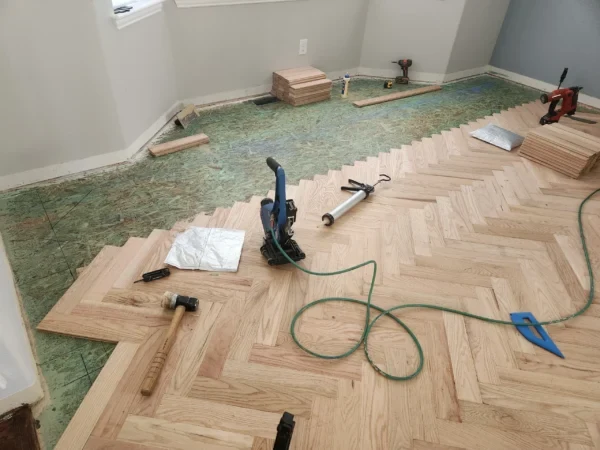
Wood floor installation

Floating Floor Installation System

The floating floor system is a popular modern technique where planks are not directly attached to the subfloor. Instead, they are connected to each other using click-lock or tongue-and-groove mechanisms. The entire floor “floats” above the subfloor on an underlayment layer.

This method offers excellent flexibility and is often preferred for DIY projects due to its simplicity. It also allows for natural expansion and contraction of the wood, reducing the risk of cracking or warping over time. Many homeowners choose this approach when looking for a faster and less invasive installation process.

In addition, floating floors can be installed over a variety of existing surfaces, including tile and concrete, as long as they are level and clean. This makes renovation projects more convenient and cost-effective.

One limitation is that floating floors may not feel as solid as glued or nailed installations. However, advancements in design and materials have significantly improved their stability and performance.

This method continues to grow in popularity due to its efficiency and adaptability in modern homes.

Staple-Down Method for Engineered Wood

The staple-down method is commonly used for engineered wood flooring, offering a secure and efficient installation process. In this technique, flooring planks are fastened to a wooden subfloor using staples driven through the tongue of each board. This creates a tight hold while still allowing some natural movement of the wood.

This method is valued for its speed and reliability. Compared to traditional nail-down systems, staples are quicker to install and provide strong holding power. It is especially effective in residential environments where engineered wood is preferred for its stability and resistance to humidity changes.

One important requirement is a suitable wooden subfloor, as this method cannot be used directly on concrete. Proper spacing and alignment are also essential to maintain a consistent appearance across the floor.

When executed correctly, this approach delivers a durable and visually appealing finish. It is often selected by professionals who want a balance between strength and installation efficiency.

Click-Lock Flooring Systems

Click-lock systems have become one of the most convenient solutions in modern flooring projects. These systems allow planks to snap together without the need for nails, glue, or staples. The edges are specially designed to interlock, creating a secure and seamless surface.

This method is especially popular among DIY homeowners because it significantly reduces installation time and complexity. It also minimizes mess, as there is no need for adhesives or heavy tools. The floor can often be installed over existing surfaces, making it ideal for quick renovations.

Another benefit is easy replacement. If a section becomes damaged, individual planks can be removed and replaced without disturbing the entire floor. This adds to the long-term practicality of the system.

Wood floor installation

Solid vs Engineered Wood Installation Differences

Understanding the difference between solid and engineered wood is essential when planning flooring projects. Solid wood is made from a single piece of timber, while engineered wood consists of multiple layers designed for added stability.

Installation methods vary significantly between the two. Solid wood typically requires nail-down or staple-down methods, while engineered wood can accommodate glue-down or floating systems. This flexibility makes engineered wood more adaptable to different environments, including areas with higher humidity.

Engineered wood is often preferred in modern homes due to its resistance to expansion and contraction. Solid wood, however, remains highly valued for its longevity and ability to be refinished multiple times.

Common Mistakes and Maintenance After Installation

Even the best flooring materials can fail if installation mistakes occur. Common issues include poor subfloor preparation, incorrect spacing, and improper adhesive or fastener use. These mistakes can lead to gaps, buckling, or premature wear.

Another frequent problem is ignoring acclimation time. Wood needs to adjust to indoor conditions before installation, and skipping this step often results in movement after the floor is laid. Proper planning helps avoid these issues and ensures long-term stability.

After installation, maintenance plays a crucial role in preserving the floor’s appearance. Regular cleaning, avoiding excess moisture, and using protective pads under furniture can significantly extend its lifespan. Seasonal humidity changes should also be managed to reduce expansion and contraction.

Conclusion

Understanding the different methods of wood flooring helps homeowners make informed decisions based on durability, design preferences, and installation requirements. From nail-down and glue-down techniques to modern floating and click-lock systems, each approach offers unique benefits suited to different environments and budgets.

Choosing the right method ensures long-lasting performance and enhances the overall value of your space. Proper preparation and installation are just as important as the material itself.

For expert guidance and professional service, Calabrese Hardwood Flooring in Firestone is available to assist with your flooring needs. You can contact them at +1 720-384-8478 for reliable support and quality craftsmanship that ensures your flooring project is completed to the highest standard.


https://www.spreaker.com/episode/what-are-the-different-methods-of-wood-floor-installation–72990576

https://www.podomatic.com/podcasts/katherinelyo27podcast/episodes/2026-07-15T06_11_14-07_00

https://stream.redcircle.com/episodes/72b7d8a9-ffe1-4be9-bb5a-663d752b9707/stream.mp3