You've narrowed your hardwood flooring choice to oak, congratulations! Oak remains America's most popular hardwood species for good reason: it's durable, beautiful, and holds value over time. But now comes the million-dollar question: red oak or white oak?
While these two species share the oak name, they deliver surprisingly different results in your home. Understanding these differences – from grain patterns and color tones to durability and climate performance – will help you make the right choice for your Denver property.
Let's settle this debate once and for all with a comprehensive, side-by-side comparison.
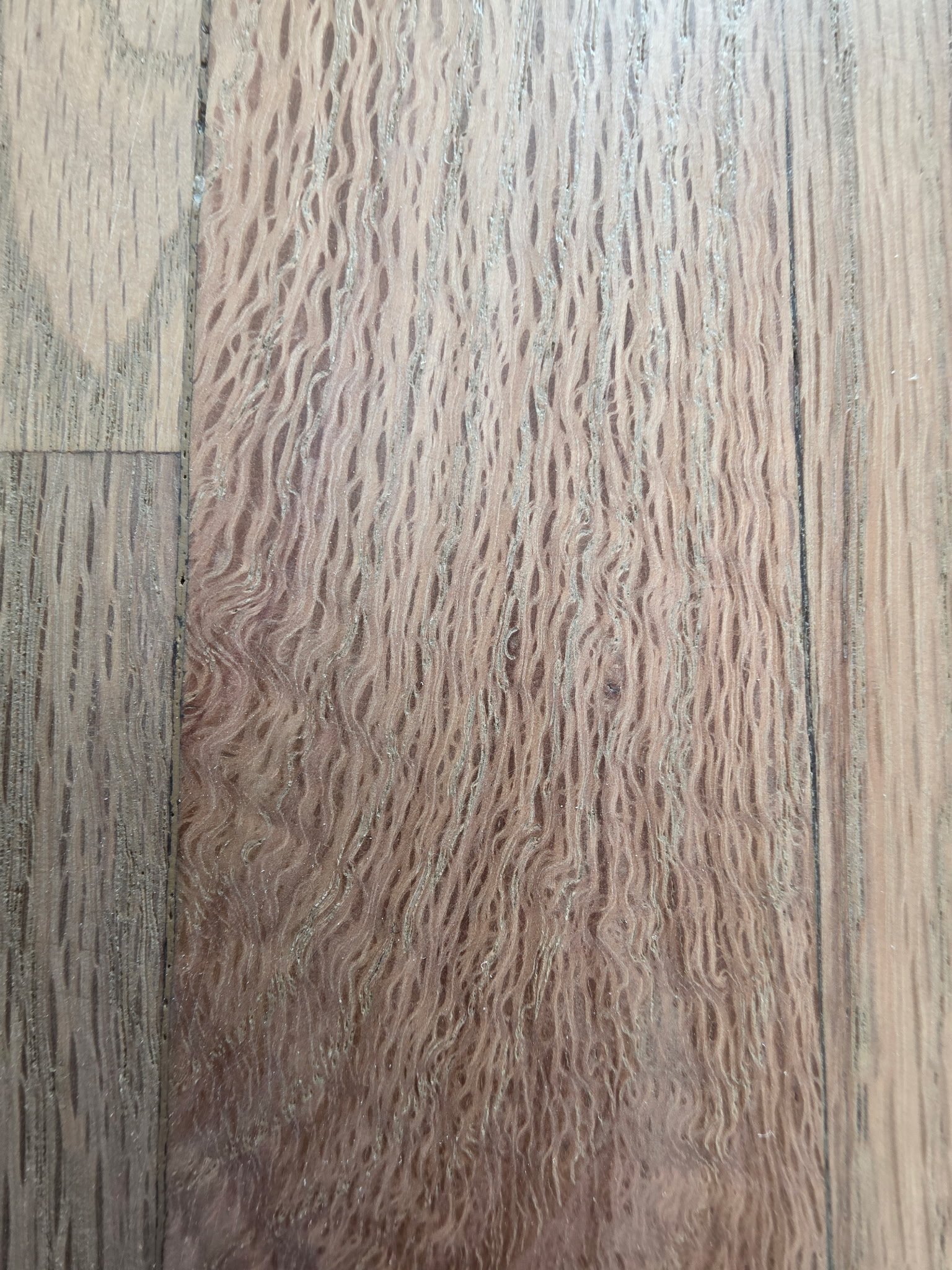
Red Oak
"The Classic American Choice"
Warm, prominent grain patterns with pink-to-reddish undertones. Traditional appeal that's defined American homes for generations.
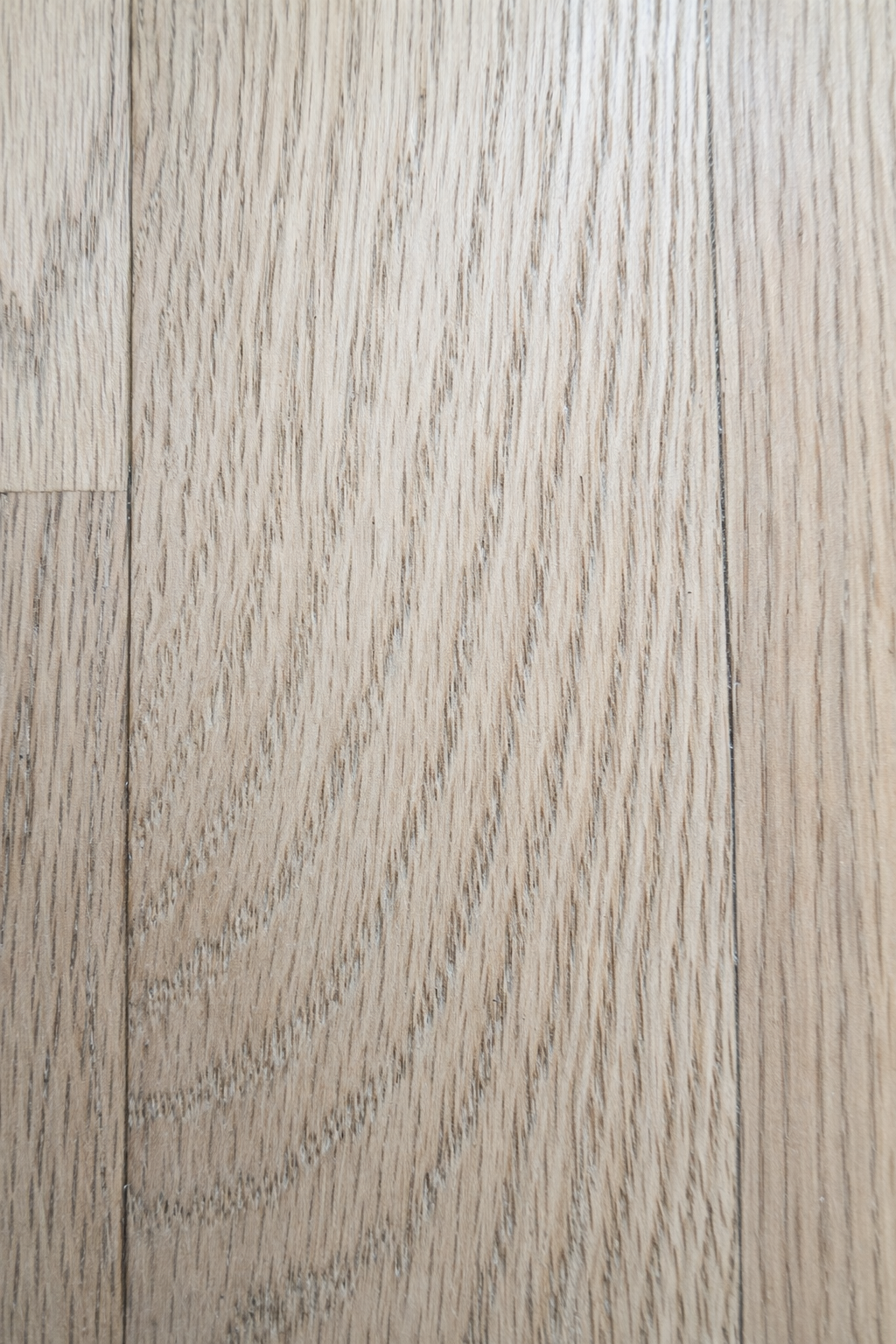
White Oak
"The Modern Sophisticate"
Subtle grain with cooler gray-brown tones. Contemporary elegance that's increasingly popular in upscale renovations.
Visual Differences: The First Thing You'll Notice
Grain Pattern and Texture
This is where red oak and white oak diverge dramatically:
Red Oak Grain:
- Bold, prominent grain patterns: Stronger cathedral shapes and flame patterns
- More variation: Swirling, wavy grain adds visual movement
- Open grain structure: Larger pores create more texture (requires more stain)
- Traditional aesthetic: The grain you picture when you think "classic hardwood floors"
White Oak Grain:
- Subtle, refined grain patterns: Less dramatic, more consistent
- Tighter grain structure: Smaller pores create smoother appearance
- Ray flecking: Unique "flake" patterns add character without being busy
- Contemporary aesthetic: Clean, sophisticated look that pairs with modern design
Color and Tone
The color difference is immediately apparent – even before staining:
Red Oak Natural Color:
- Ranges from light pink to salmon to deeper reddish-brown
- Warm undertones (pink/red/amber)
- Brighter, more vibrant appearance in natural light
- Can appear slightly "peachy" or "rosy"
White Oak Natural Color:
- Ranges from light tan to medium brown with gray undertones
- Cooler undertones (gray/taupe/brown)
- More neutral, subdued appearance
- Never has pink or red hues
How Staining Affects Each Species
Here's where it gets interesting – and where many homeowners make uninformed decisions:
Red Oak with Stain:
- Absorbs stain readily: Open grain soaks up more stain
- Color pops: Medium and dark stains appear vibrant and rich
- Pink undertones persist: Even dark stains can't completely hide the red/pink base (especially in natural light)
- Grain becomes more dramatic: Stain accentuates the prominent pattern
- Best stain colors: Medium browns, honey tones, classic walnut – avoid cool grays
White Oak with Stain:
- Tighter grain absorbs less: Requires less stain, more even application
- True-to-color results: Stain appears closer to what you see on the sample
- Versatile color base: Cool gray undertones accept both warm and cool stains beautifully
- Trending stain choices: Weathered grays, driftwood tones, pure white washes, ebony blacks
- Natural finish popularity: Many designers leave white oak completely unstained
Winner for Staining Versatility: White Oak
White oak accepts a broader range of stain colors and contemporary finishes. Its neutral base allows for dramatic transformations – from pale Scandinavian whites to rich espresso blacks – without fighting underlying red tones.
Durability and Performance: The Practical Comparison
Janka Hardness Rating
The Janka test measures a wood's resistance to denting and wear:
| Species | Janka Hardness (lbf) | Durability Rating |
|---|---|---|
| Red Oak | 1,290 lbf | Good - Suitable for most residential applications |
| White Oak | 1,360 lbf | Excellent - Slightly harder, more wear-resistant |
What this means in real life:
- White oak is approximately 5.4% harder than red oak
- Both species are plenty durable for residential use (including homes with pets and kids)
- White oak edges ahead for high-traffic commercial applications
- The difference is noticeable over decades, not years
Water Resistance and Moisture Performance
This is where white oak demonstrates a significant advantage:
White Oak:
- Closed cellular structure: Tyloses (cellular growth) block moisture absorption
- Naturally water-resistant: Used in boat building and barrel making for centuries
- Better for humid climates: Less prone to moisture-related expansion
- Basement applications: Sometimes approved where red oak isn't (with proper acclimation)
Red Oak:
- Open cellular structure: No tyloses means moisture penetrates more easily
- More susceptible to water damage: Spills should be wiped immediately
- Greater seasonal movement: Expands and contracts more with humidity changes
- Not recommended for moisture-prone areas: Avoid bathrooms, laundry rooms, or damp basements
Winner for Durability & Water Resistance: White Oak
White oak's harder surface and naturally water-resistant structure make it the more durable choice, especially for kitchens, entryways, and homes with active lifestyles.
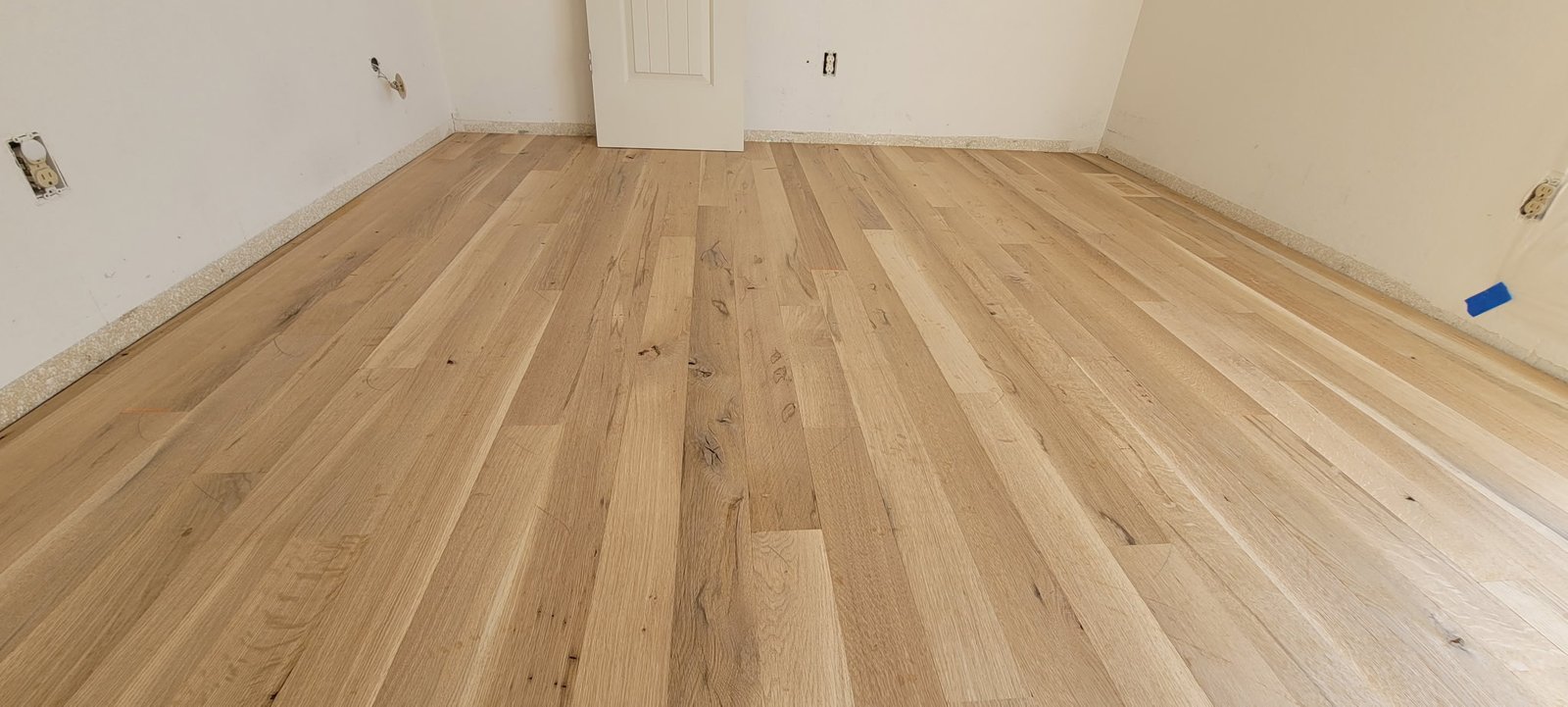
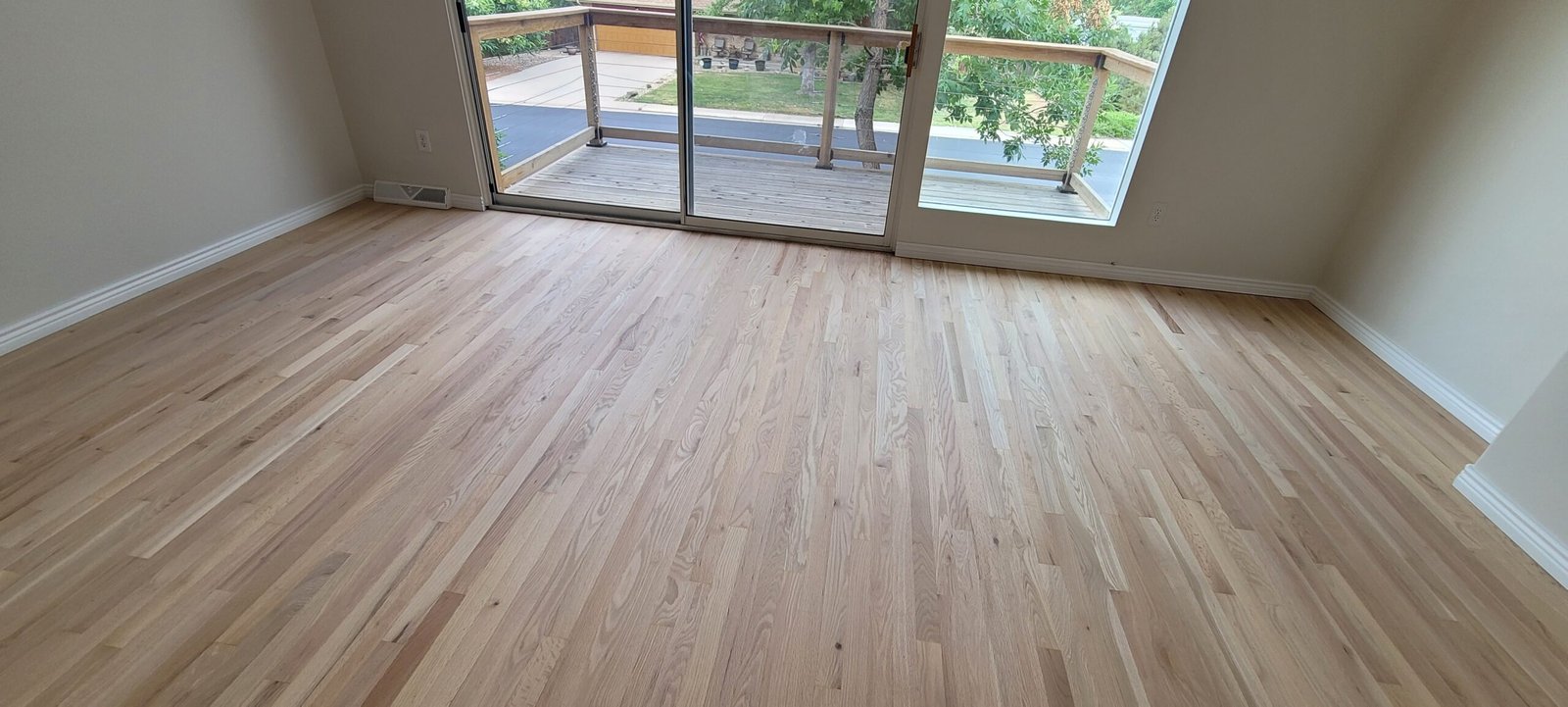
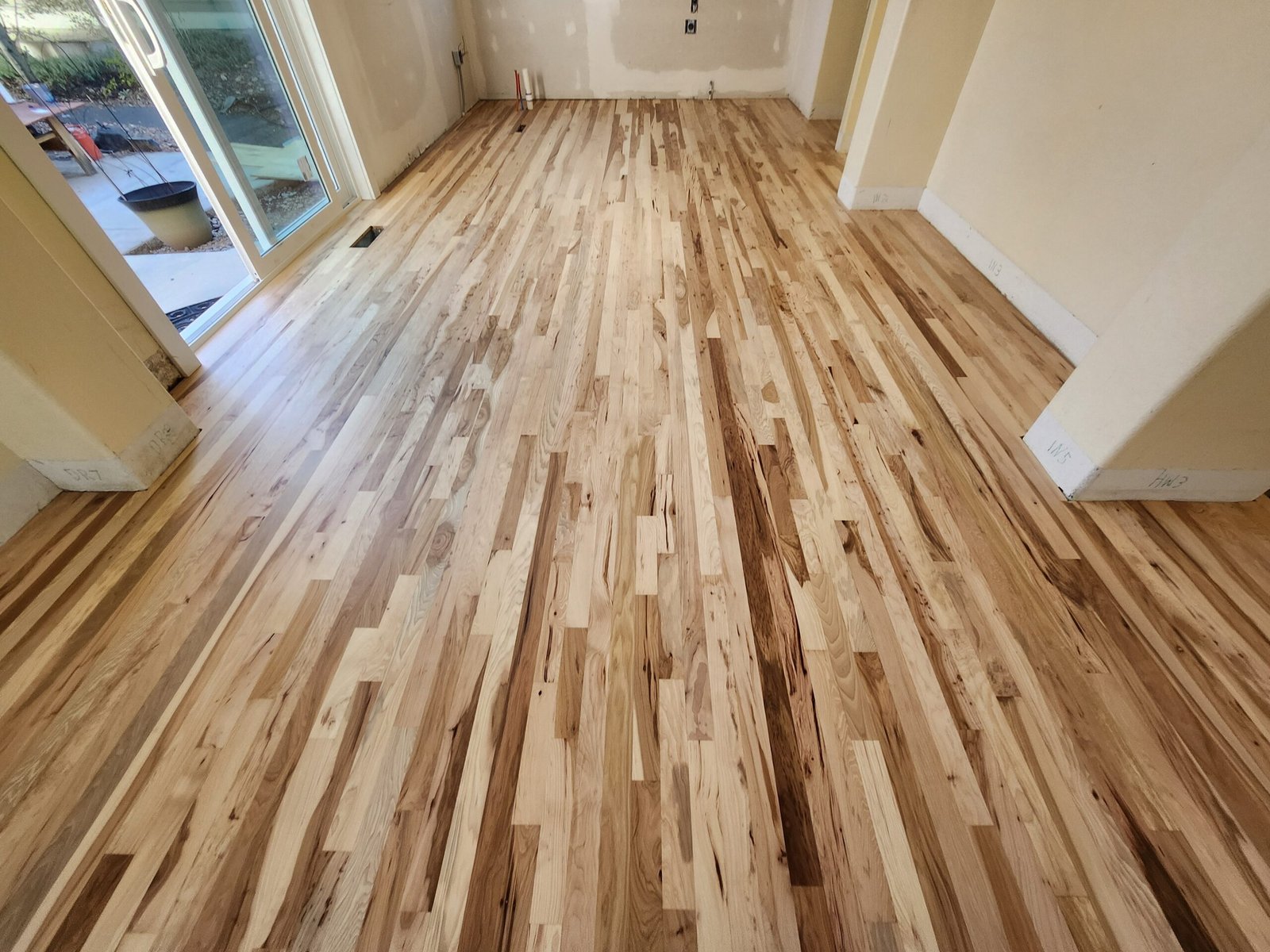
Real Oak Installations: See the Difference
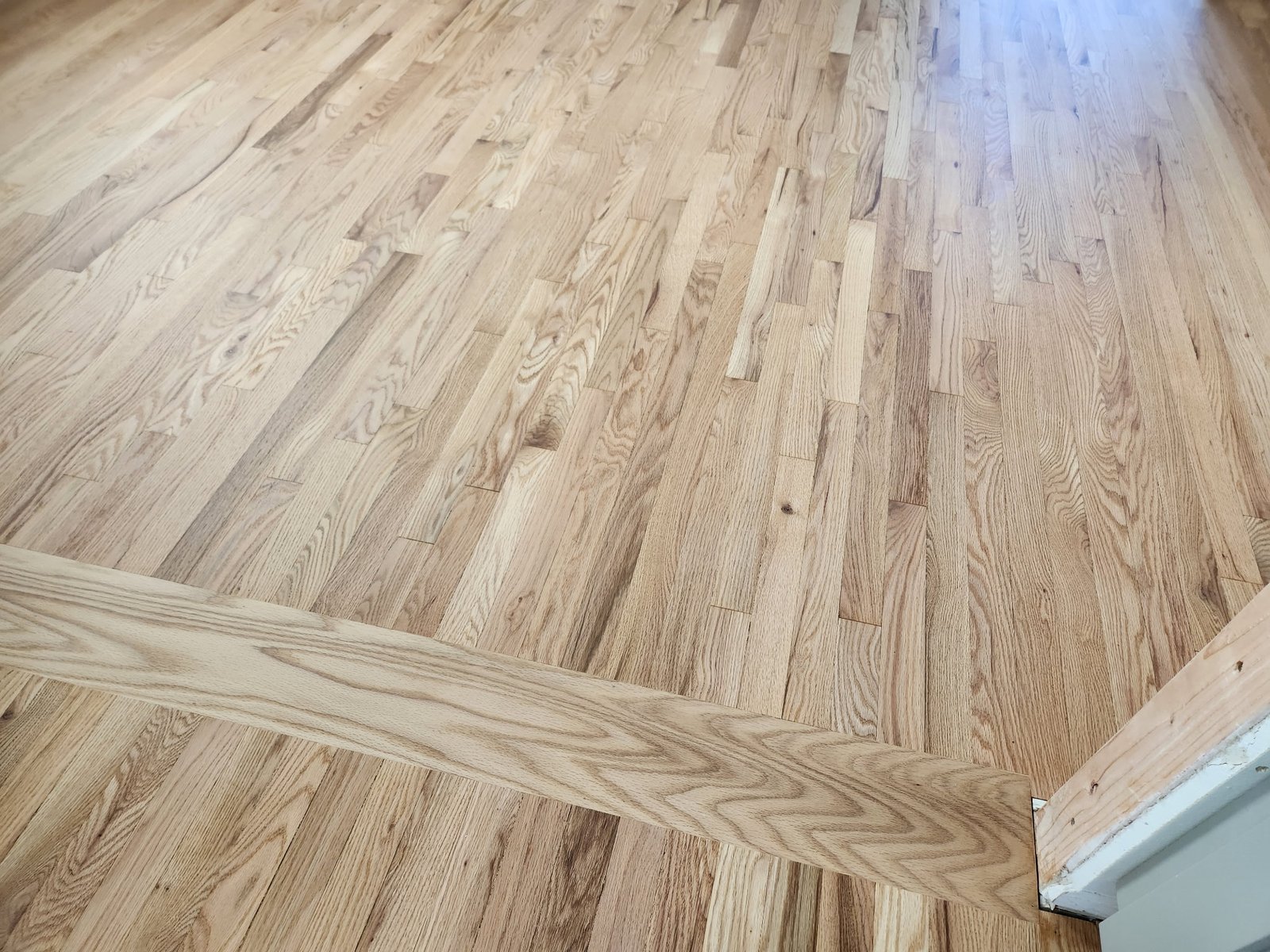
Here's how both species look in actual Colorado homes we've completed:
Side-by-Side Comparison: The Complete Picture
| Feature | Red Oak | White Oak |
|---|---|---|
| Hardness | 1,290 lbf (Good) | 1,360 lbf (Better) |
| Grain Pattern | Bold, prominent, wavy | Subtle, tight, consistent |
| Natural Color | Pink to reddish-brown (warm) | Tan to brown with gray (cool) |
| Water Resistance | Moderate (open pores) | Excellent (closed pores with tyloses) |
| Stain Acceptance | Good - absorbs quickly, may show blotching | Excellent - more even, versatile colors |
| Design Style | Traditional, classic, rustic | Contemporary, modern, transitional |
| Trending Factor | Timeless classic | Current design favorite |
| Availability | Widely available | Widely available (slightly less common) |
| Cost | $4-8 per sq ft | $5-10 per sq ft |
| Refinishing | Excellent (5-7 times) | Excellent (5-7 times) |
Cost Comparison: Budget Reality
Material Costs:
- Red Oak: $4-8 per square foot (material only)
- White Oak: $5-10 per square foot (material only)
- Price difference: White oak typically costs 10-25% more
Why is white oak more expensive?
- Slower growing tree (takes longer to reach harvestable size)
- Higher demand in current design trends
- Superior characteristics (hardness, water resistance)
- More processing required for some grades
Installation Costs:
- Both species install identically
- Expect $3-5 per square foot for professional installation
- No difference in labor costs between the two
Long-Term Value:
- White oak: Premium pricing may increase resale value in design-conscious markets
- Red oak: Timeless appeal maintains value, especially in traditional neighborhoods
- Both species last 50-100+ years with proper maintenance
- Refinishing costs identical for both ($3-5 per sq ft)
Which Oak Is Right for Your Home?
Choose Red Oak If:
Perfect For:
- Traditional or classic home architecture
- You love prominent wood grain character
- Warm, cozy aesthetic appeals to you
- Working with a tighter budget (10-25% less expensive)
- Matching existing red oak floors in your home
- Colonial, craftsman, or traditional ranch styles
- You plan medium-tone or warm stain colors
- Historical accuracy is important (pre-2000s homes)
Avoid Red Oak If:
- Your home is contemporary or modern
- You want gray, white, or cool-toned stains
- High-moisture areas (kitchens near sinks, entryways)
- You dislike pink/red undertones
- Minimalist aesthetic is your goal
- You want the "on-trend" designer look
Choose White Oak If:
Perfect For:
- Modern, contemporary, or transitional design
- You want maximum staining versatility
- Kitchens and high-moisture areas
- Scandinavian, minimalist, or industrial aesthetics
- Cool or gray color palettes in your home
- Natural (unstained) wood look
- You prefer subtle, sophisticated grain
- Maximizing durability and water resistance
- Homes with fluctuating humidity levels
- Investment in premium materials
Avoid White Oak If:
- Budget is extremely tight (though the difference is modest)
- You specifically love dramatic wood grain
- Traditional warm tones are non-negotiable
- Matching existing red oak elsewhere in home
Common Questions Answered
Can I mix red oak and white oak in the same home?
Short answer: Technically yes, but we don't recommend it.
Why not? The color and grain differences are immediately apparent, even to untrained eyes. It looks unintentional and can hurt resale value. If you're adding to existing red oak, stick with red oak. If you're doing a whole-home renovation, pick one species and commit.
Exception: Different floors on different levels (e.g., red oak upstairs, white oak downstairs) can work if there's a clear visual separation like stairs or level changes.
Does one refinish better than the other?
Both species refinish beautifully and equally well. You can sand and refinish either species 5-7 times over its lifetime. The tight grain of white oak may show slightly less "grain raising" during sanding, but the difference is negligible for professional results.
Which is better for Denver's climate?
White oak edges ahead due to Denver's humidity fluctuations. Our dry winters (often below 20% humidity) followed by more humid summers can cause wood movement. White oak's tighter cellular structure means less expansion and contraction. That said, both species perform well in Denver with proper installation and acclimation.
What about engineered red oak vs engineered white oak?
The same color and grain differences apply. Engineered versions of both species offer improved dimensional stability (beneficial in Denver), but white oak still outperforms red oak in moisture resistance. Engineered floors can only be refinished 1-3 times depending on the wear layer thickness.
Will my choice affect resale value?
In Denver's current market, white oak commands a slight premium in upscale, design-conscious neighborhoods. Red oak remains highly desirable in traditional suburban areas and doesn't hurt resale value. Choose based on your design goals, both are excellent investments.
Installation and Maintenance: What to Expect
Installation Considerations
Similarities:
- Both install using identical methods (nail-down, glue-down, or float)
- Same acclimation period required (7-14 days in Denver's climate)
- Identical expansion gap requirements
- No difference in difficulty for installers
White Oak Advantage:
- Slightly more stable during installation (less prone to seasonal movement during installation process)
- Can sometimes be installed in areas where red oak might be risky (near exterior doors, kitchens)
Maintenance and Care
Daily care is virtually identical:
- Sweep or vacuum regularly to prevent grit damage
- Clean spills immediately (especially crucial for red oak)
- Use hardwood-safe cleaning products
- Maintain consistent indoor humidity (40-60%)
- Use area rugs in high-traffic zones
- Felt pads under furniture legs
- Trim pet nails regularly
White oak is slightly more forgiving of moisture exposure, but neither species should be regularly exposed to water. Both benefit from periodic professional cleaning and recoating every 3-5 years (costs $1-2 per sq ft).
The Verdict: Our Professional Recommendation
For Most Denver Homeowners: White Oak
After installing thousands of square feet of both species across Denver, we find white oak edges ahead for most modern homeowners. Its superior water resistance, dimensional stability, staining versatility, and contemporary aesthetic align with current design trends and Denver's climate challenges. The modest price premium (10-25%) is offset by better performance and potentially higher resale value.
For Traditional Homes & Budgets: Red Oak
Red oak remains an excellent choice for traditional architecture, warm design aesthetics, and budget-conscious projects. Its classic American appearance has stood the test of time, and its performance is more than adequate for most residential applications. Don't let trends push you away from red oak if it genuinely suits your home better.
Still Deciding? Let's Talk
The best way to choose between red oak and white oak is to see them in your actual home lighting conditions. Here's what we recommend:
Schedule a Free In-Home Consultation:
- We'll bring large samples of both red oak and white oak
- View them in your home's natural and artificial lighting
- See how they look next to your walls, trim, and furniture
- Compare different stain options on both species
- Discuss Denver-specific installation considerations
- Get honest guidance based on your actual needs (not sales pressure)
What to Prepare:
- Photos of rooms where flooring will be installed
- Paint colors or furniture photos
- Your design inspiration (Pinterest, magazines, etc.)
- Budget range
- Timeline expectations
Ready to see red oak and white oak samples in your Denver home? Request a free consultation or contact Calabrese Hardwood Flooring today. We'll help you make a confident decision with zero pressure. Visit CalabreseHardwood.com to explore our services including installation, refinishing, and more.
About Calabrese Hardwood Flooring
Serving Denver homeowners with expert hardwood flooring guidance since 2006. We specialize in helping clients navigate choices like red oak vs white oak with honest, pressure-free consultations. Our installations are backed by decades of experience and a commitment to craftsmanship. Learn more about our family business.